Why Science Education Matters in Everyday Life
Science is not limited to laboratories or university research. Scientific knowledge influences everyday decisions involving health, technology, food, transportation, energy, and the environment. Science education helps students and communities understand how the world works and evaluate information more carefully.
Building Scientific Understanding
Here’s how:
Learning Through Questions
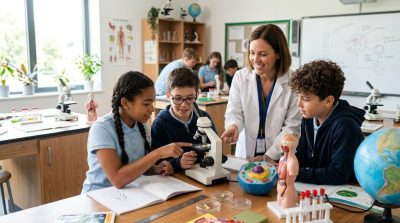 Science education encourages people to ask questions and investigate possible explanations. Rather than simply accepting information, students learn to observe evidence, test ideas, and revise conclusions when new information becomes available. This process develops skills that are useful far beyond science classes.
Connecting Science to Daily Life
Lessons become more meaningful when students can connect them to familiar experiences. Cooking can demonstrate chemistry, weather can introduce atmospheric science, and household electricity can provide examples of physics. These connections show that science is part of ordinary life.
Developing Critical Thinking
See below:
Evaluating Information
People encounter scientific claims through news reports, advertisements, social media, and conversations. Education can help individuals distinguish evidence-based information from unsupported claims.
Understanding sources and asking how conclusions were reached are important skills.
Solving Problems
Scientific thinking involves breaking complex questions into smaller parts. Students can learn to identify variables, gather information, compare results, and consider alternative explanations. These abilities can also be useful in work and personal decision-making.
Preparing Future Innovators
Science education can encourage students to pursue careers in medicine, engineering, environmental science, technology, research, and many other fields. More importantly, it can develop curiosity and confidence in approaching unfamiliar problems.
Conclusion
Science education provides more than academic knowledge. It teaches people how to ask questions, evaluate evidence, solve problems, and understand the world around them. By connecting classroom lessons with everyday experiences, educators can help students develop skills that remain valuable throughout their lives.